Close

Get in touch
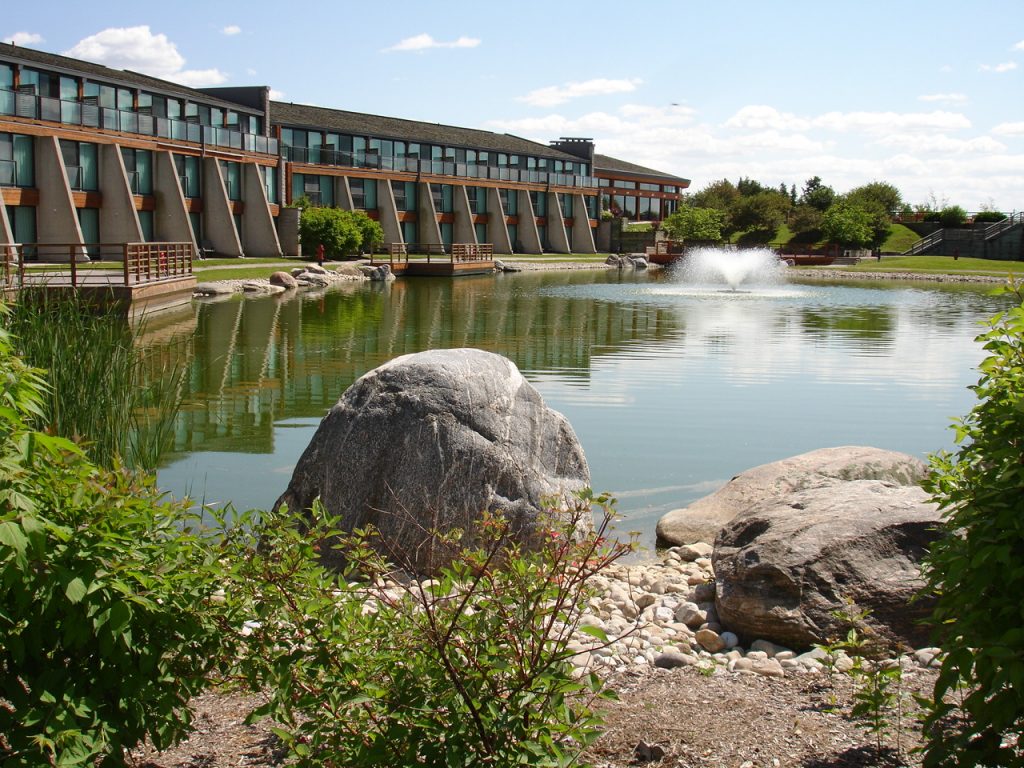
The Kingbridge Centre
While we navigate through these uncertain times and government regulations related to the COVID-19 pandemic, we will continue to support our clients during these challenging times and thank you for your understanding and patience.
Mission
The Kingbridge Centre is a world-class destination specializing in off-site meetings, learning, problem solving and leadership development that provides a unique immersive environment to expand mindset and create collaboration, innovation and transformational change.
We are passionate about fostering innovation and addressing positive systemic change at the local level that makes a beneficial impact in the world. Our campus is designed to nurture creative and collaborative problem solving while fostering a sense of experimentation and discovery.
Discover Kingbridge
At Kingbridge, we understand that what happens outside of the meeting is just as important as what happens inside the meeting room. Whether you prefer some time in our fitness room, playing a game of pickleball in our indoor court, a reflective walk through the nature trails, or engaging with your team members in outdoor activities such as biking, volleyball or enjoying s’mores by the fire, the Kingbridge Centre has a variety of amenities designed to enrich your experience.
Kingbridge Products & Services
Revitalization
A tranquil oasis to retreat & bring mind & body back into harmonious balance.
Bring Together Virtual Teams
A perfect co-working environment to fill the gap between remote & hybrid work.
Our Guiding Principles
A Mission-driven Enterprise
Kingbridge is a mission driven enterprise guided by a focused purpose to assist and enable individuals and institutions to convene, curate and collaborate on solving their most pressing problems and challenges pertaining to leadership, skills development, innovation, economic prosperity, and growth. We have a deep belief in harnessing science and technology in providing experiences and experiments that enable our clients to be bold in order to create a better world for us all.
Place-based Learning & Engagement
By harnessing the power of place, we have intentionally designed an environment ideal for off-site convening, holistic and action-based learning, rapid ideation, space for safe introspection, reflection and reaction and for demonstrating new forms of innovation. Our infrastructure and ecosystem is designed to surround you with innovative ideas and unique installations that spark wonder of future possibilities.
MISSION-PURPOSED DRIVEN BUSINESS
We aspire to solve complex problems and take on cutting edge challenges that lead to innovative business solutions that bring positive impact to the world for multiple decades.
An Innovative Culture
We foster an environment that supports creative thinking to uncover new opportunities. We demonstrate a spirit of curiosity, creativity, innovation, resiliency, inclusion, and continual improvement. We are passionate and dedicated about creating, curating, crafting and hosting exceptional and memorable experiences.
Partnerships of Purpose
We have close working relationships and arrangements with key partners to harness the infrastructure of the Kingbridge Centre to augment, experience and add value for our clients and also spawn activities that drive economic prosperity and impact by accelerating groundbreaking innovations that propel community transformation and enterprising initiatives which make a positive impact in the world.
Environmentally Focused
Located on the Oak Ridges Moraine with the Humber River flowing through the property, it is important for us to support and maintain best practices regarding environmental stewardship pertaining to our operations. We utilize a variety of both equipment and management approaches to mitigate our impact to the local ecology while demonstrating innovative solutions. Some of our initiatives include: an independent waste water treatment plant, a designated managed forest and an onsite apiary and indoor farm. We are looking into future initiatives including: solar photovoltaic and generating biofuels from our food waste.
History
Throughout its history Kingbridge has always been known as a place that creates the conditions for transformation to occur.
In 1989 designed by legendary architect Arthur Charles Erickson in collaboration with Murray Koffler, founder of Shoppers Drug Mart and co-founder of the Four Seasons the vision for the campus was to be one of the first world-class health and wellness spas in Canada, King Ranch.
In 1992, CIBC converted the property into a private state-of-the-art leadership development training facility.
Purchased in 2001, by John Abele, retired co-founder of Boston Scientific, designed the vision of Kingbridge to be a global residential convening destination that supports collaborative problem solving and innovation.
In January 2021, John Abele made the decision to retire, entrusting the ownership to the Pathak Family Trust and its affiliated entity Ekagrata Inc. Kingbridge’s new Chairman Prashant Pathak has been involved in John Abele’s vision and mission alongside the Kingbridge team for the last 15 years. He is excited to carry on the legacy of collective learning, problem solving, and innovation in addition to evolving the vision into living learning space designed for demonstrating and accelerating innovations with the potential to make positive impacts on the environment , address the future of food, advance green energy models, achieve clean water and create healthy thriving communities.
Getting to Kingbridge
Driving Instructions
FROM LESTER B. PEARSON INTERNATION AIRPORT(YYZ) · GPS: 43.914728 -79.552131
Public Transaction
UP EXPRESS – FROM UNION STATION TO KING CITY GO STATION
Union Pearson Express (UP Express) connects Toronto Pearson International Airport to Union Station. From Union Station take the Go Train going northbound to King City Go Station. To book a taxi pick-up from King Go Station, kindly contact our preferred cab company Astro Taxi at 905-850-8555.
- · UP Express trains depart every 15 minutes, 19.5 hours a day, between 5:30am and 1:00am.
- · Click here for UP Express details.
- · Click here for Go Train details.
TTC SUBWAY – VAUGHAN METROPOLITAN CENTRE STATION
Travel to and from downtown Toronto using the TTC Subway to the newly built Vaughan Metropolitan Centre Station (Highway 7 and 400). To book a taxi pick-up from Vaughan Metropolitan Centre Station, kindly contact our preferred cab company Astro Taxi at 905-850-8555.